


I have pretty low standards when it comes to movies. A movie does not have to be great or perfect for me to enjoy it. Sometimes it doesn’t even have to be all that good. I’ve stat through and enjoyed my share of two-star movies. And then there’s that whole subgenre of “movies so bad they’re good” which I’m addicted to.
And then there are movies that are just bad. Howard the Duck, released on this day in 1986, is often considered to be one such film.
Most truly bad movies aren’t just bad, they’re confusing. And by that I don’t mean the plots are confusing, I mean at their core, they’re confusing — or perhaps confused is a better way to put it. They don’t know what they want to be.
Howard the Duck does not know what it wants to be. Reviews from the 80s and reviews today concur that the tone of this movie is all over the place. The movie has a bunch of slapstick, silly humor and jokes that get interrupted by a love scene between a woman and a duck from outer space. Auduences were split between being offended, being grossed out, and if you were a thirteen-year-old like me, wondering if that was even possible.
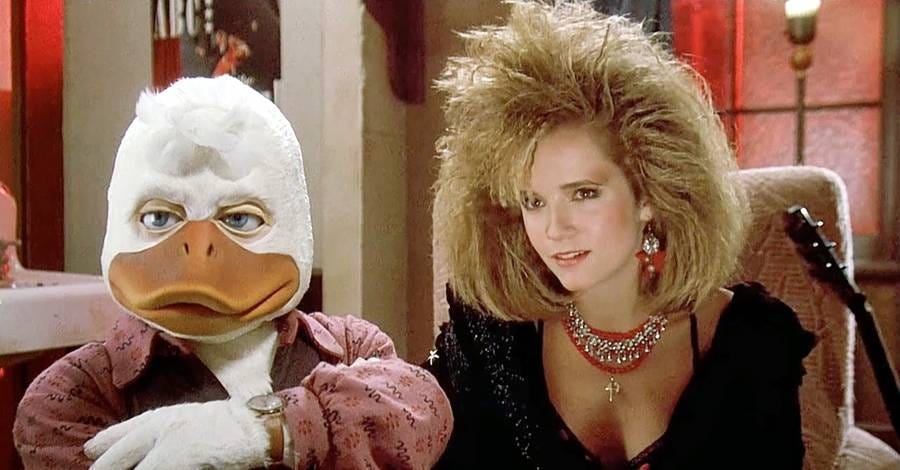
Lea Thompson stars as Beverly Switzler, and believe me, in 1986 Lea Thompson could do no wrong in my eyes. Thompson went from appeared in Jaws 3-D in 1983 to being part of the Red Dawn ensemble in 1984, but it was 1985’s Back to the Future that made her a household name. By the time this film was released she had a huge fan base, both human and duck.
On the flipside of that coin we get Heffrey Jones as Walter Jenning and Tim Robbins as Phil Blumburtt. By the time Howard the Duck was released Jones had already appeared in Ferris Bueller’s Day off and would soon appear in Beetlejuice; Robbins was coming off of Top Gun and would spend the next few years starring in films like Bull Durham, Twister, Cadillac Man, and one of my all-time favorites, Jacob’s Ladder.
And while all of those actors are great and all of them were given questionable material to work with, an animatronic duck was entrusted to carry the majority of the film; a duck with limited facial mobility and, again, confusing direction. As a fan of practical special effects I’ll say what they were able to pull off was pretty impressive, but based on ticket sales and audience reaction, it wasn’t enough.
Most viewers had no idea the film was based on a comic book and, as such, didn’t know how to take the material. We don’t find out how Howard got zapped to Earth until halfway through the film and for long periods of time there’s no antagonist and, in a way, no protagonist. Unlike E.T. who has to hide in closets and dressed up as a ghost on Halloween, Howard is free to wander the streets of Cleveland with barely a second-glance. All we hear about is how Howard wants to return to Duckworld, but he wasn’t hooking up with Lea Thompson there so I’m not sure what the hurry was.
Many good games have been birthed by bad films, but Howard the Duck was not one o them. LucasArts had a long string of successful computer games. This was the same company that brought us Maniac Mansion, the Indiana Jones games, the Secret of Monkey Island, Labyrinth, Ballblazer, and dozens of others. With Howard the Duck we got… this. The only reason to play a movie-based games is so you can pretend like you are in the movie. In this game, Howard begins on an island surrounded by trees with a goal of… who knows. It’s as confusing as the movie. Maybe it’s worse.
If there’s anything worth remembering from the film (or the game) it’s the film’s ending song/video, with Lea and the Holograms performing the movie’s theme song.
Released by Universal, Howard the Duck became one of the largest box office bombs of all time. With a budget of $38 million the movie brought in less than half of that (about $16 million) at the box office. The film was panned by critics and audiences alike. It all but destroyed Willard Huyck’s career as a director, and George Lucas had to sell of large chunks of his company to cover the losses.
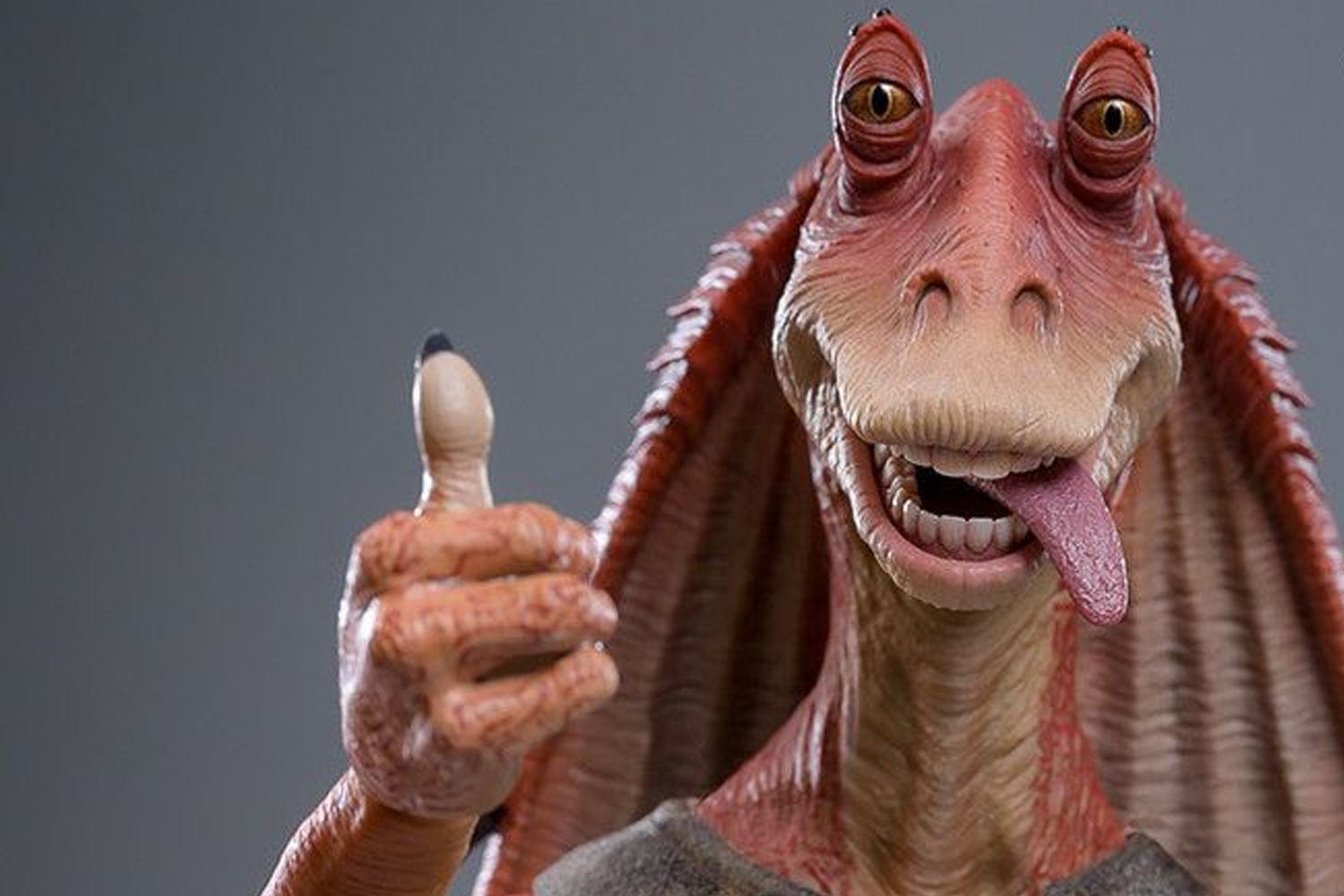
Fortunately for audiences, George Lucas learned his lesson and never again put a non-human character as one of the main characters in one of his films.
For some reason, I had the novelization of Howard the Duck and I remember it being really funny, a lot funnier than the film.
my scalp hurts every time I see this photo! I can taste the Aqua Net.